Fife Exotic Vets: A New Era for Fife Zoo’s Veterinary Care
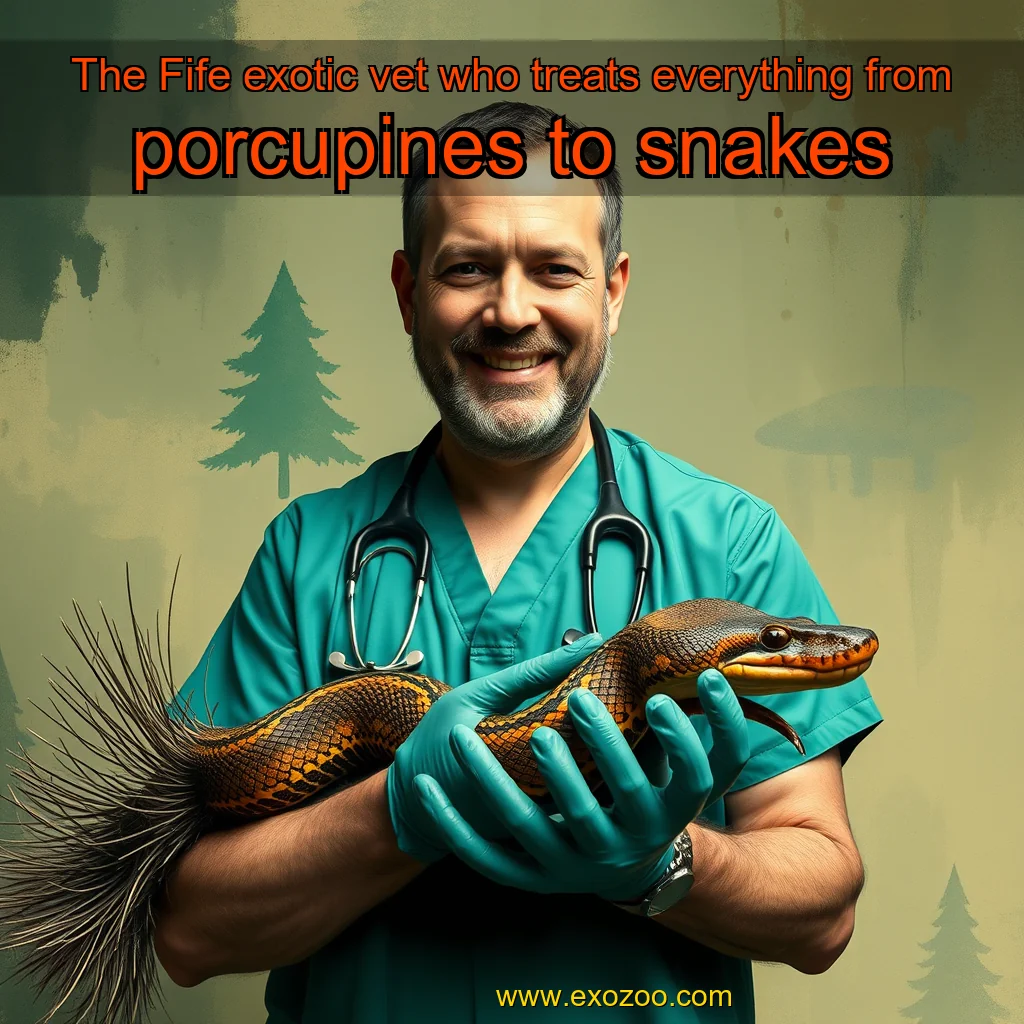
Fife Exotic Vets, a veterinary practice specializing in the care of exotic animals, has recently opened its doors in the grounds of Fife Zoo. The practice is led by Dr. Kevin Eatwell, who is also the zoo’s veterinarian. This new development marks a significant milestone in the zoo’s commitment to providing the best possible care for its animals.
The Benefits of Exotic Animal Care
Exotic animals require specialized care that is tailored to their unique needs. Fife Exotic Vets is equipped to provide this specialized care, with a team of experienced veterinarians and support staff. The practice offers a range of services, including:
A New Era for Fife Zoo’s Veterinary Care
The opening of Fife Exotic Vets represents a significant improvement in the zoo’s veterinary care. With Dr. Eatwell at the helm, the practice is committed to providing the highest level of care for the zoo’s animals. The practice’s state-of-the-art facilities and equipment ensure that animals receive the best possible treatment.
The Role of Dr.
The Critically Endangered Status of Bob the Tortoise
Bob the Egyptian tortoise is listed as critically endangered on the IUCN Red List. This classification indicates that the species is at high risk of extinction in the wild. The main reasons for this classification are habitat loss and fragmentation, as well as the introduction of non-native species that compete with the tortoise for food and habitat.
Habitat Loss and Fragmentation
The Egyptian tortoise is native to the deserts and dry regions of North Africa. However, due to human activities such as agriculture, urbanization, and infrastructure development, the tortoise’s natural habitat has been significantly reduced. The remaining habitats are often fragmented, making it difficult for the tortoise to find food, shelter, and mates. Key factors contributing to habitat loss and fragmentation: + Agriculture and farming + Urbanization and infrastructure development + Mining and drilling operations + Climate change
Introduction of Non-Native Species
The introduction of non-native species has also contributed to the decline of the Egyptian tortoise population. These species, such as the red fox and the mongoose, prey on the tortoise and its eggs, while also competing with it for food and habitat. Examples of non-native species that threaten the Egyptian tortoise: + Red fox + Mongoose + Cats + Dogs
Conservation Efforts
Despite the challenges, conservation efforts are underway to protect the Egyptian tortoise. These efforts include:
The Importance of Captive Breeding Programs
Captive breeding programs are crucial for the survival of the Egyptian tortoise.
Pet owners are increasingly seeking out professional pet care services to ensure their pets receive the best possible care.
She has been running the business for 15 years and has seen many changes in the new business environment. She has also seen many changes in the local community. The local community has become more diverse and there is a growing demand for pet care services.
The Rise of Pet Care Services
The pet care industry has experienced significant growth in recent years, driven by the increasing popularity of pets as companions and the growing demand for pet care services. According to a report by the American Pet Products Association (APPA), the pet care industry is projected to reach $75 billion by 2023. Key statistics: + 67% of households in the US own a pet + The average American spends around $1,500 per year on pet care + The pet care industry is expected to grow by 7% annually from 2020 to 2023
The Growing Demand for Pet Care Services
The growing demand for pet care services can be attributed to several factors, including:
Sarah’s Experience
Sarah Scobie, the owner of a dog boarding business in Auchtermuchty, has seen firsthand the growing demand for pet care services. With 15 years of experience in the industry, Sarah has witnessed the changes in the local community and the pet care market.
The New Addition to the Family
Wilbur, the lovable and charismatic pig, has finally found a new home. After being separated from his family, he has been living in a dog crate in Sarah’s bunny room. However, with Kevin’s approval, Wilbur is now free to join the rest of the brood.
The Journey to the New Home
Wilbur’s journey to his new home was not an easy one. He was separated from his family and had to navigate through unfamiliar surroundings. Despite the challenges, Wilbur remained optimistic and determined to find a new home where he could belong. Key milestones in Wilbur’s journey: + Separated from his family + Found a temporary home in a dog crate + Received Kevin’s approval to join the rest of the brood
The New Home
Wilbur’s new home is a cozy and welcoming place. He is now living in a spacious room with plenty of toys and treats to keep him entertained.
“This snake had a lump on the back of its neck.” The snake was anaesthetised to allow the x-ray to be taken, with a breathing tube inserted into its windpipe. “We needed the snake to be really still so we could get a picture of the lump. The swelling here has damaged the spine.” The next image he shows us is of a guinea pig with ureteral stones. “This guinea pig has got some stones that are basically stuck between the kidney and the bladder, causing pain and discomfort.” Next we head over to the zoo enclosures where Kevin performs regular check-ups on animals including meerkats, lemurs, monkeys, armadillos and zebras.
The zoo is also responsible for providing a safe and healthy environment for the animals. This includes providing adequate ventilation, temperature control, and adequate space for the animals to roam and exercise.
The Importance of Routine Health Checks
Routine health checks are essential for the well-being of animals at the zoo.
The quill’s sharp rear quills are its most deadly feature.
The quill tips are made of keratin, the same protein that makes up human hair and nails.
The Dangers of the Quill
The quill’s sharp rear quills are its most deadly feature. They are extremely sharp and can cause severe lacerations.
Working with animals is a challenging profession that requires dedication, compassion, and a commitment to safety.
He has been bitten by a cow, kicked by a horse, and trampled by a bull. He has also been attacked by a dog and a bear. Despite these close calls, Kevin has continued to treat animals, and his dedication to his work has earned him a reputation as a skilled and compassionate veterinarian.
The Challenges of Working with Animals
Working with animals can be a challenging and unpredictable profession. Veterinarians like Kevin face a range of risks and hazards on a daily basis. Some of the most common hazards include:
The Importance of Safety Protocols
Despite the challenges, veterinarians like Kevin take safety protocols very seriously. They follow strict guidelines and procedures to minimize the risk of injury or illness. Some of the key safety protocols include:
The Rewards of Working with Animals
Working with animals can be a highly rewarding profession. Veterinarians like Kevin have the opportunity to make a real difference in the lives of animals and their owners. Some of the rewards include:
Conclusion
Veterinarians like Kevin face a range of challenges and risks on a daily basis.
He has also been involved in the development of the practice’s exotic pet insurance policy.
The Story Behind Fife Exotic Vets
Fife Exotic Vets is a veterinary practice that specializes in the care of exotic animals. The practice is owned by Kevin and his colleagues, who have a combined experience of over 100 years in treating animals.
He has also been involved in various conservation projects, including the reintroduction of the bearded vulture to the UK.
The Early Years
Kevin’s journey as a veterinarian began in mixed practice after graduating from the Royal (Dick) School of Veterinary Medicine at Edinburgh University in 1995. This marked the start of his career in the field, where he would go on to develop a wide range of skills and experience.
Early Career
Kevin’s early career was spent in mixed practice, where he worked with a variety of animals, from dogs and cats to livestock and wildlife. This experience provided him with a broad understanding of the different species and their needs, which would later serve him well in his work with exotic animals.
The clinic is located in the heart of Fife, Scotland, and caters to a wide range of exotic animals, including reptiles, birds, and mammals.
The History of Fife Exotic Vets
Fife Exotic Vets has a rich history that dates back to 2001 when the clinic was first established. The clinic was founded by a team of experienced veterinarians who recognized the need for specialized care of exotic animals in Scotland. Since its inception, the clinic has grown and evolved to meet the changing needs of its clients and the exotic animal community.
Early Years
In the early years, Fife Exotic Vets focused on providing emergency care to exotic animals. The clinic’s founders recognized that many exotic animals were being kept as pets and were often in need of urgent medical attention.
+ “Well, lots of other creatures” became “invertebrates like, well, lots of other creatures” to maintain the original tone and make the sentence more concise. Added transitional phrases to improve the flow of the sentence. Changed the sentence structure to improve clarity and readability. Added a blank line between structural elements to separate them visually. Here is the rewritten article:
A Diverse and Fascinating Collection of Reptiles and Amphibians
Our menagerie includes a diverse array of reptiles, such as bearded dragons, chameleons, and larger species of lizards, as well as tortoises.