Assumptions About Wildfires and Wildlife
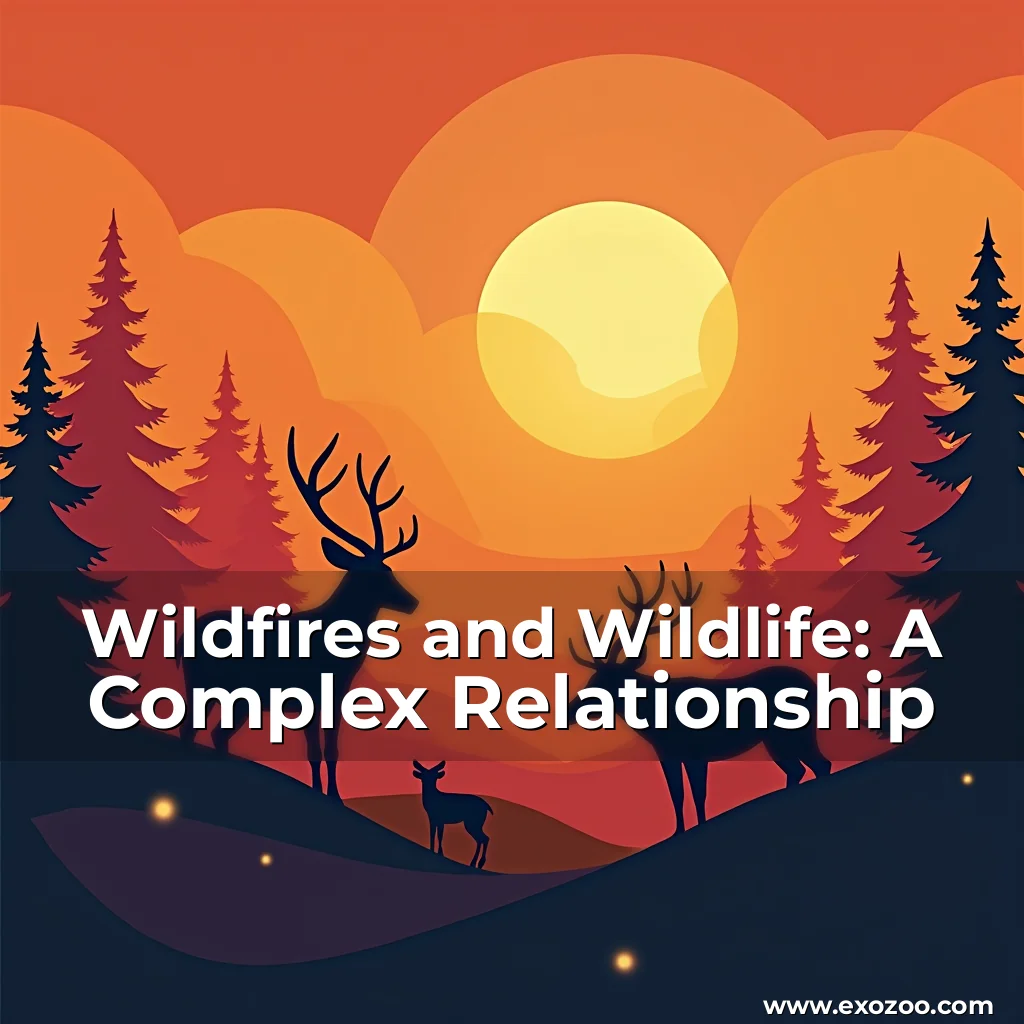
Wildfires often take center stage in news stories, with a focus on human casualties and property damage. However, the impact of wildfires on wildlife is often overlooked. Many people assume that wildfires are a death sentence for animals, but the reality is more nuanced.
- Wildfires can have varying effects on wildlife, depending on factors such as fire intensity, elevation, and the type of habitat affected.
- Some wildfires can actually be beneficial to wildlife, particularly those that occur at higher elevations and in areas with sparse vegetation.
- Wild animals have a natural instinct to flee from fires, which often allows them to escape unharmed.
Wildlife’s Response to Wildfires
According to Dax Mangus, big game coordinator for the Utah Division of Wildlife Resources, wildlife’s response to wildfires is complex and influenced by various factors. “It depends a little bit,” Mangus said. “There are circumstances, like a moderate fire at a higher elevation could be a really good thing for wildlife. A really intense fire or a fire at a lower elevation can be bad for wildlife.”
Mangus noted that while wild animals can be hurt or killed by wildfire, their survival instincts usually lead them to safety. “For the most part, most animals will move away from the fire,” he said. “It happens occasionally, but it’s rare that the animals actually get burned up in a fire.”
Habitat Changes and Wildlife Rehabilitation
When a wildfire passes through an area, it can have a profound impact on the local wildlife habitat. “When a wildfire comes through, it changes the habitat,” said Daniel Eddington, habitat conservation coordinator for the Utah DWR. Part of Eddington’s job is to help wildlife habitats recover after a wildfire. This process can take time, but conservation efforts aim to minimize the negative impacts and promote recovery.
| Efforts to recover from a wildfire: | • Habitat restoration | • Reintroducing native species | • Managing fire scars |
Wildlife Rehabilitation Centers
In rare cases, wildlife rehabilitation centers may be called upon to care for animals injured or killed by wildfires. “It’s just something that my heart and soul tells me that I need to do,” said Debbie Pappas, founder and owner of Second Chance Wildlife Rehabilitation in Carbonville, Utah. Pappas shared her experience of how wildlife rehabilitation centers may be asked to care for animals hurt by wildfire, including the challenges posed by chemicals and injuries. “We may have injuries to contend with,” Pappas said. “Singing, actual burning, who knows? Then the chemicals that are being dropped by the planes as well.”
Despite the challenges, Pappas emphasized that wildlife rehabilitation centers rarely take on the task of caring for animals hurt by wildfires.
Conclusion
While most animals can escape the dangers of wildfires, the reality is that if they cannot, death is often the outcome. The impact of wildfires on wildlife is complex, and understanding this relationship is crucial for effective conservation efforts.