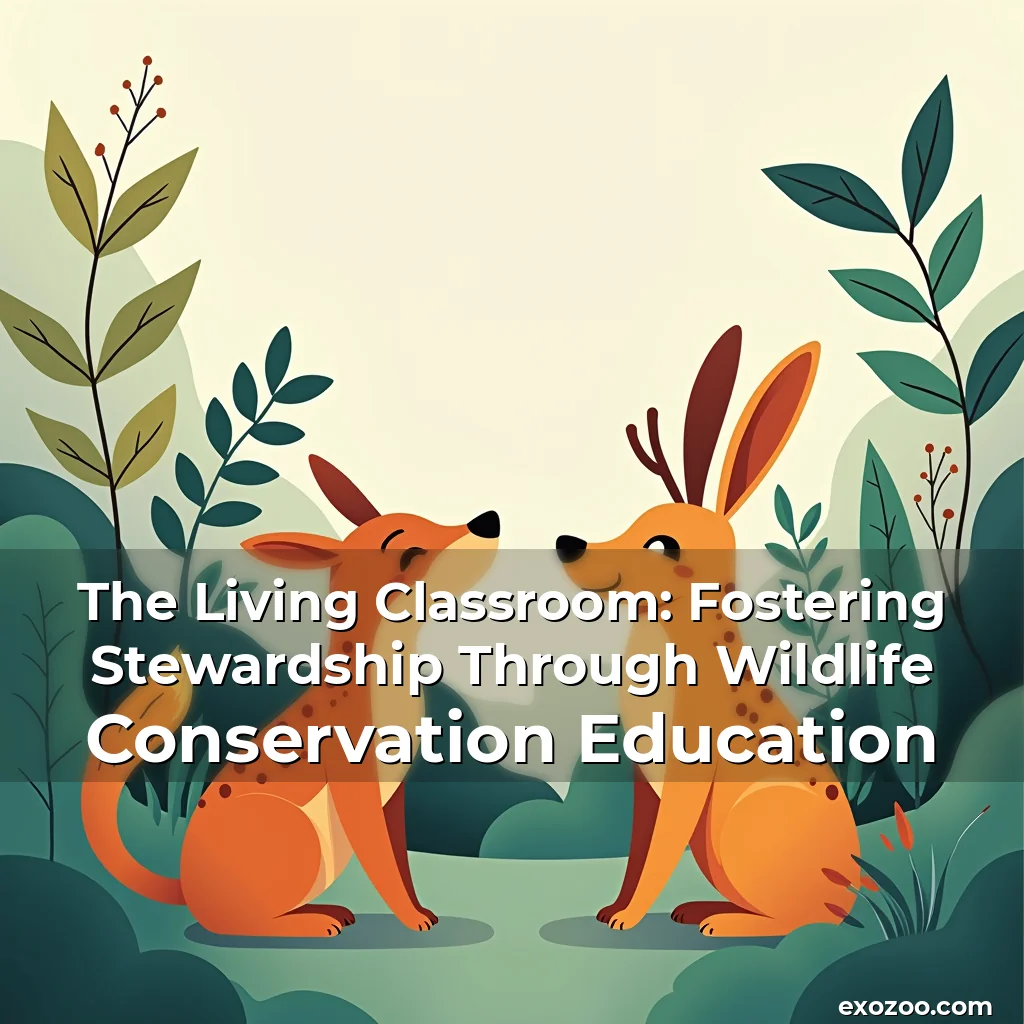
The Living Classroom: Fostering Stewardship Through Wildlife Conservation Education
In an era where human activity reshapes ecosystems at an unprecedented rate, wildlife conservation education emerges not merely as an academic pursuit but as a vital lifeline for biodiversity preservation. This article explores how immersive learning experiences can cultivate deep ecological awareness among individuals from diverse backgrounds.
The ExoZoo community recognizes that true conservation begins with understanding—understanding why species vanish, how habitats degrade, and what each person’s role is in reversing these trends. By transforming knowledge into action through educational initiatives, we empower future generations to become stewards of our planet’s rich biological heritage.
Foundations of Effective Conservation Education
Successful wildlife conservation programs are built upon three foundational pillars: scientific accuracy, cultural relevance, and experiential engagement. These elements work synergistically to create meaningful learning environments that resonate across different age groups and communities.
Scientific rigor ensures that conservation messages remain evidence-based rather than speculative. When educators present data showing declining populations or habitat fragmentation using reliable sources, learners develop critical thinking skills essential for informed decision-making about environmental issues.
Cultural relevance transforms abstract concepts into tangible realities by connecting conservation principles to local traditions, languages, and values. For example, indigenous knowledge systems often contain centuries-old practices that align perfectly with modern conservation goals when appropriately integrated into curricula.
Experiential engagement goes beyond passive information transfer by immersing students in hands-on activities such as citizen science projects, guided field observations, and interactive simulations. These methods activate multiple senses and cognitive processes simultaneously, creating stronger neural connections between new information and existing knowledge frameworks.
- Data-driven approaches: Incorporating real-time monitoring tools allows students to track changes in animal behavior patterns over time, making conservation efforts feel immediate and impactful.
- Cross-generational learning: Intergenerational workshops bring together elders who possess traditional ecological knowledge with youth eager to learn digital tracking technologies, fostering mutual respect and innovation.
Bridging Knowledge Gaps Through Innovative Teaching Methods
Educators must continually innovate their pedagogical strategies to address evolving challenges in wildlife conservation. Traditional lecture-based instruction alone cannot adequately prepare students for complex global issues requiring multidisciplinary solutions.
Project-based learning offers an effective alternative by tasking students with solving real-world problems related to endangered species protection or ecosystem restoration. These open-ended assignments encourage creativity while reinforcing core scientific principles through practical application.
Virtual reality technology has revolutionized remote learning possibilities, allowing participants to explore rainforests, coral reefs, or Arctic tundras without leaving their classrooms. Immersive experiences help demystify distant ecosystems and foster emotional connections crucial for long-term behavioral change.
Game-based learning platforms simulate ecological scenarios where players make decisions affecting entire habitats. These gamified experiences teach cause-and-effect relationships in ways that textbooks struggle to convey effectively.
Case Study: The Amazon Rainforest Virtual Experience
A pioneering VR program developed in collaboration with Amazonian researchers enables users to witness deforestation rates firsthand by virtually walking through disappearing forests. Participants observe tree-cutting operations alongside Indigenous guardians working to protect remaining tracts of land.
This experience includes interactive modules where learners choose interventions that impact carbon sequestration levels, wildlife corridors, and local economies. Post-experience surveys show significant increases in participant motivation to support reforestation campaigns and sustainable agriculture practices.
Building Community Networks for Lasting Impact
Sustainable conservation outcomes depend heavily on cultivating strong community networks capable of maintaining momentum over extended periods. Educational initiatives must therefore incorporate social infrastructure development components.
Community-led education programs prove particularly effective because they leverage existing trust structures within neighborhoods and villages. Local leaders become ambassadors for conservation ideals, ensuring messaging remains culturally appropriate and socially acceptable.
These grassroots movements often employ peer-to-peer teaching models where trained volunteers share knowledge informally during daily interactions rather than relying solely on formal classroom settings. Such organic dissemination enhances message retention and applicability.
Technology-enabled communication platforms facilitate ongoing dialogue between educators, practitioners, and stakeholders worldwide. Online forums, mobile apps, and social media groups serve as virtual meeting places for sharing best practices and addressing emerging threats collaboratively.
Nurturing Young Voices Through Youth-Led Initiatives
Youth participation in conservation education represents both an investment in the future and a recognition of young people’s capacity for innovative problem-solving. Empowering children to lead projects fosters ownership of environmental stewardship responsibilities.
Student-run eco-clubs provide structured yet flexible spaces for exploring various aspects of wildlife protection—from designing school gardens that attract pollinators to organizing beach cleanups along coastal regions. These extracurricular activities complement standard curriculum requirements while building leadership capabilities.
Mentorship programs pair experienced conservationists with aspiring advocates, offering personalized guidance tailored to individual interests and strengths. This relational approach helps maintain engagement levels even after initial curiosity wanes.
Competitions focused on creative expression—such as art contests highlighting endangered species or storytelling events recounting nature-related journeys—encourage emotional intelligence alongside technical skill development in conservation fields.
Leveraging Technology for Global Awareness Campaigns
Digital platforms have democratized access to high-quality conservation resources, enabling widespread participation regardless of geographic location or socioeconomic status. Social media, online courses, and streaming services now deliver expert insights directly to personal devices.
Interactive webinars featuring live Q&A sessions with field biologists allow audiences to ask questions about current research findings while viewing real-time footage from remote locations around the world. This immediacy creates powerful emotional responses that translate into concrete actions later.
Mobile applications designed specifically for wildlife identification aid citizens in recognizing native flora and fauna accurately. Features include photo recognition software, audio guides for bird calls, and GPS-triggered alerts about nearby protected areas.
Augmented reality features overlay digital information onto physical landscapes, helping users visualize potential impacts of climate change on familiar surroundings. Seeing projected sea level rises superimposed on city streets makes abstract predictions suddenly urgent and tangible.
Measuring Success Beyond Academic Metrics
Evaluating the effectiveness of wildlife conservation education requires looking beyond standardized test scores toward broader indicators of societal transformation. Behavior change metrics offer more insightful assessments than conventional grading systems ever could.
Surveys tracking shifts in consumer habits—like increased preference for sustainably sourced products or reduced plastic usage—reveal measurable progress towards environmentally conscious lifestyles. These trends indicate successful internalization of conservation values.
Participation rates in volunteer programs such as park clean-ups or wildlife rescue missions demonstrate growing public commitment to active involvement in environmental causes. High turnout figures suggest strong community buy-in behind educational messages.
Longitudinal studies following cohorts of students exposed to robust conservation curricula show persistent pro-environmental behaviors decades later, proving lasting influence well beyond formative years.
Fostering International Collaboration Through Shared Learning Platforms
Globally connected classrooms enable cross-border exchanges that enrich understanding of shared planetary challenges. Students from disparate cultures collaborate on joint projects addressing common concerns like ocean pollution or migratory bird conservation.
Virtual exchange programs use video conferencing tools to link schools across continents, facilitating direct interaction between peers working on similar topics under varying circumstances. These dialogues break down geographical barriers while strengthening collective resolve against environmental degradation.
International conferences organized exclusively for student delegates provide rare opportunities to engage directly with policymakers shaping global conservation policies. Exposure to professional networks expands horizons significantly earlier than typical career trajectories would permit.
Shared digital repositories house case studies, lesson plans, and multimedia materials freely accessible to educators everywhere. This open-source model accelerates innovation cycles by allowing rapid adaptation of proven methodologies to new contexts.
Conclusion
Wildlife conservation education stands as a transformative force capable of bridging humanity’s relationship with nature from exploitation to coexistence. Its power lies not in theoretical knowledge alone but in its ability to inspire lifelong dedication to ecological responsibility.
To truly advance this mission, every member of the ExoZoo community must commit to continuous learning, active participation, and advocacy for conservation-minded policies. Together, we can ensure that today’s lessons shape tomorrow’s solutions for Earth’s invaluable wildlife legacy.